
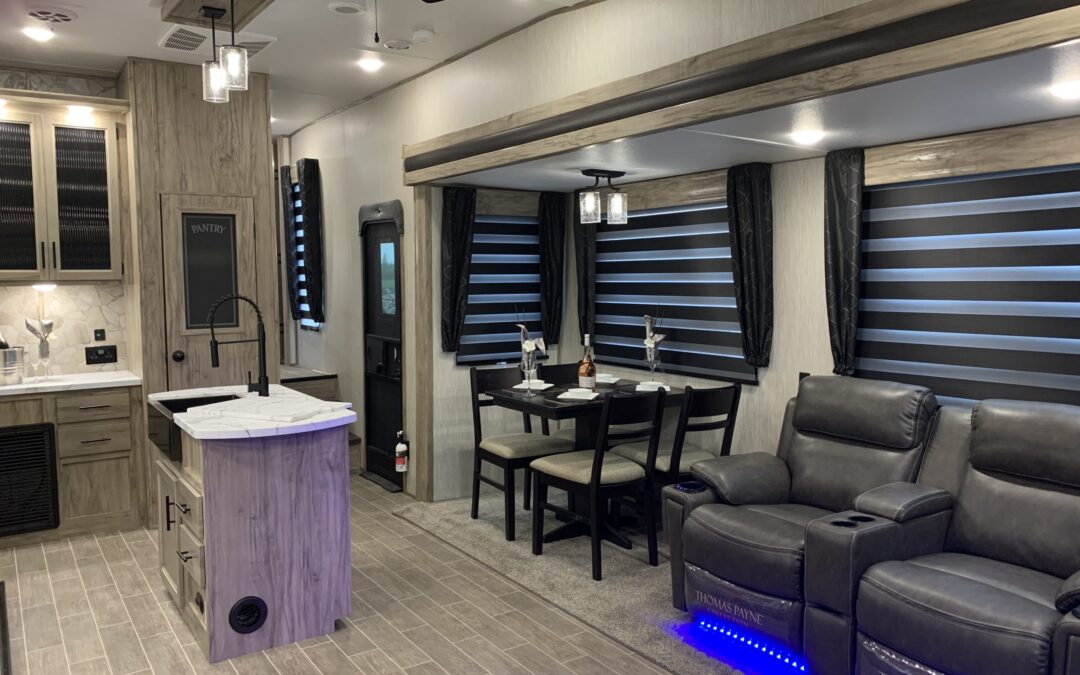
Winterisation Checklist for Fifth Wheel Caravans
Cold, wet UK winters can be tough on touring kit. A clear winterisation routine protects your fifth wheel’s plumbing, batteries, seals, and finishes, and it keeps your warranty in good standing. Use this practical checklist to put your caravan to bed for winter, or to prepare for frost-safe touring with confidence.
Drain and protect your water system
- Empty fresh, grey, and black tanks fully. Open low-point drains and run taps to purge lines of water.
- Bypass the water heater (if fitted) before adding antifreeze.
- Add non-toxic, caravan-safe antifreeze to traps and lines where required. In many cases you only need antifreeze in P-traps and waste lines after you have blown out or drained supply lines.
- Remove and store filters. Leave taps in the open position to prevent trapped pressure.
- If you use a freshwater pump, run it dry for a few seconds after draining to expel residual water.
- Leave toilet valves dry and add a small amount of antifreeze to the bowl and blade seal.
Tip: Always use products labelled for recreational vehicles. Avoid household automotive antifreeze in potable water systems.
Batteries: charge, isolate, and store correctly
- Fully charge the leisure battery bank, then either disconnect the negative terminal or place the unit on a smart maintenance charger.
- If you store the caravan off-grid, remove batteries to a cool, dry place. Float charge monthly and keep terminals clean.
- For lithium systems, follow BMS guidance and manufacturer storage voltage recommendations.
- Before storage, switch off all 12V consumers at the control panel and check that parasitic draws are eliminated.
Heating and frost protection
- If you have mains hook-up, set the heating to frost-protect mode. Confirm thermostat operation and test smart controls.
- If storing without hook-up, fully drain the water system, leave the unit ventilated, and avoid relying on gas heating unattended.
- Inspect heat outlets and underfloor spaces for blockages or debris so warm air can circulate when needed.
Moisture and ventilation
- Clean and dry the shower, sinks, and fridge. Defrost, wipe, and leave the fridge door slightly ajar.
- Remove damp textiles, bedding, and food.
- Crack roof vents slightly and use moisture traps to reduce condensation. Good airflow protects finishes and prevents mould.
Seals, roof, and underbelly checks
- Inspect roof seams, skylights, slide-out gaskets, and window rubbers. Look for gaps, lifting sealant, or perishing.
- Clean slide-out toppers and seals, remove debris from tracks, and treat gaskets with a suitable conditioner.
- Check the armoured underbelly panels and fixings for damage or loose sections.
- Repair any defects promptly to maintain your water ingress warranty.
Gas bottle safety
- Turn off cylinders and regulators. Disconnect and store bottles upright in a ventilated locker.
- Check hose dates, clips, and pigtails. Replace anything cracked or out of date.
- Test gas and CO detectors and replace batteries.
- If you tour through winter, carry two filled 13 kg bottles and keep regulators free of ice and snow.
Tyres, brakes, and stabilising
- Inflate tyres to storage pressures. If the caravan will stand for long periods, rotate tyre positions monthly or use axle stands following manufacturer guidance.
- Chock securely, apply steadies, and leave the auto-levelling system in a neutral storage stance.
- Grease moving parts and check brake adjustment as part of your annual service.
Electrical and firmware checks
- Test RCDs, MCBs, and 12V fuses. Label any spares you keep onboard.
- Update smart control firmware if prompted and verify that monitors, tank gauges, and alarms work correctly.
- If you use solar, clean panels, check cabling, and confirm winter charge rates.
Interior care and cleaning
- Wipe mood lighting lenses with a soft, dry cloth.
- Cycle recliners and moving furniture mechanisms before storage, then leave them off and unplugged.
- Vacuum vents, under furniture spaces, and the return air paths for heating.
- Leave internal doors, wardrobes, and drawers slightly open to prevent stale air pockets.
Book servicing and protect your warranty
Annual servicing is essential to uphold Eurocruiser’s 3-year manufacturer’s warranty and 5-year water ingress warranty. A winterisation service typically includes pressure testing, seal inspection, gas safety checks, tank flushing, and system verification. Book early to secure a slot before hard frosts set in.
Touring through winter instead of storing?
- Keep the water system live with heated hoses, insulated covers, and regular movement of water.
- Use frost-protect heating on hook-up and run high-draw appliances one at a time to avoid tripping supplies.
- Ventilate during showers and cooking to control moisture.
- Clear snow from the roof and slide-out toppers before retraction to protect mechanisms and seals.
FAQs: legalities, lifespan, and MOT rules
Can you legally live in a caravan in the UK?
Yes, but it depends on where the unit is sited and local planning rules. On licensed residential parks you can live in a caravan year round. On private land, full-time residential use usually requires planning consent and may be restricted by local authorities or covenants. For touring on holiday parks, time limits often apply. Always check site licensing, council regulations, and your insurance terms.
How long do caravans last, and what is the lifespan of a touring caravan?
With regular servicing and prompt seal repairs, many touring caravans